


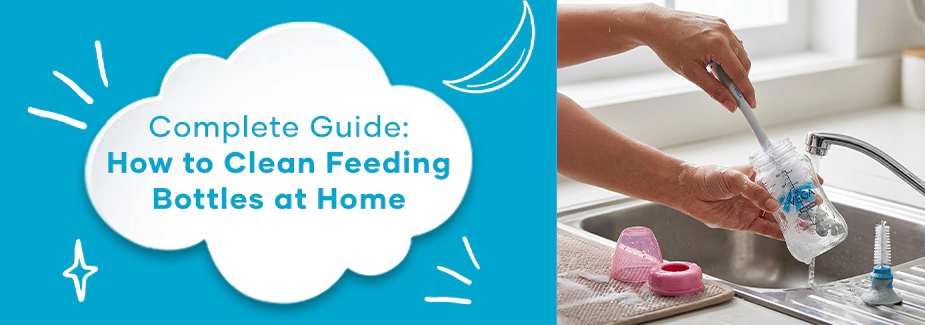
Keeping your baby healthy, safe and happy is every parent's top priority. Nothing is more important than ensuring your little one receives the best possible care and nutrition. Breast milk is the ideal source of nourishment for babies, and Vega Baby & Mom strongly supports breastfeeding as the best choice for infant nutrition. However, there are times when mothers may be occupied with personal or professional responsibilities. During such moments, breastfeeding accessories like clean baby bottles at home help ensure that your baby's nutritional needs continue to be met without interruption, making the feeding journey more convenient for both mother and baby.
While feeding bottles offer convenience even during travel, ensuring baby feeding bottle cleaning and proper sterilization is equally important. Regular bottle cleaning for babies helps create a hygienic feeding environment and supports your baby's overall well-being.
Why Is It Important to Clean Baby Bottles?
During the first few months of life, a baby's immune system is still developing, making them more vulnerable to germs and infections. This is why knowing the significance of how to clean feeding bottles thoroughly after every use is essential. Milk residue left inside the bottle or nipple can become a breeding ground for bacteria if not cleaned properly. Over time, this may lead to stomach discomfort, tooth decay or other health concerns. To help new parents maintain proper hygiene, here's a simple step-by-step guide on how to clean baby feeding bottles effectively at home. Before you begin cleaning your baby's feeding bottle, keep these essentials ready:
-
Cleaning Brush: Choose the Vega Baby & Mom 2 in 1 Bottle & Nipple Brush, ergonomically designed best feeding bottle brush to clean every corner of the feeding bottle with ease.

-
Liquid Cleanser: Use a mild, baby-safe baby bottle cleaner suitable for feeding accessories.
-
Dish Rack: A clean dish rack helps store feeding bottles hygienically while protecting them from contamination.
What is the safest way to clean baby bottles?
Follow this step-by-step baby bottle cleaning guide to ensure proper cleaning using feeding bottle brush and sterilization:
Step 1: Disassemble All Parts of the Bottle
The first and foremost feeding bottle cleaning tips is to wash your hands thoroughly with soap and water to minimize the transfer of germs. Once your hands are clean, separate every component of the feeding bottle, including the bottle, nipple, cap, ring, valves and any additional inserts. Cleaning each part individually ensures every surface is thoroughly washed.
Step 2: Rinse Under Running Water
Rinse each component under clean running water to remove leftover milk. This initial rinse helps loosen milk residue, especially from narrow openings and hard-to-reach areas before deep cleaning begins.
Step 3: Clean Using the Vega Baby & Mom Bottle & Nipple Rotating Brush
Fill the feeding bottle with the required amount of water and add a few drops of a baby-safe liquid cleanser or disinfectant. Then, the best way to clean feeding bottles is with Vega Baby & Mom Bottle & Nipple Rotating Brush, specially designed to clean both regular-neck and wide-neck feeding bottles along with bottle nipples efficiently. Its thoughtful design allows you to reach every corner of the bottle for a thorough clean. Some of its key features include:
-
A practical 2-in-1 design that cleans both bottles and nipples, eliminating the need for separate brushes.
-
Soft nylon bristles that are durable, long-lasting, and gentle on feeding accessories.
-
A 360° rotating mechanism that cleans the entire inner surface of the bottle while reducing strain on the wrist.
-
An anti-slip textured thumb rest that offers a secure and comfortable grip during cleaning.
-
A convenient round hanger that makes washing and storing the brush simple.
Use the brush to gently scrub the bottle and remove any milk stains or residue. You may also choose the Vega Baby & Mom 2-in-1 Bottle & Nipple Brush, which features a vacuum base on the handle for convenient standing during use and storage. Ensure that every section of the bottle is cleaned thoroughly.
Step 4: Clean the Bottle Nipple Carefully
Detach the nipple brush and use it to clean the bottle nipple thoroughly. Its compact design helps reach smaller spaces and the tiny feeding holes where milk residue can easily collect.
Step 5: Rinse Thoroughly
After scrubbing, rinse every bottle component under running water until all traces of the cleanser are removed. Leaving behind soap residue may affect the taste of milk and could irritate your baby's sensitive stomach.
Step 6: Sterilize and Dry

Once manual cleaning is complete, sterilization becomes the next essential step. It is the best bottle cleaning routine for newborns to maintain complete safety. Sterilizing feeding bottles helps eliminate germs and bacteria, adding an extra layer of protection for your baby's feeding accessories.
For convenient sterilizing and drying in one appliance, choose the Vega Baby & Mom 4-in-1 Electric Steam Sterilizer with Dryer. Its innovative design performs four functions—sterilizing, drying, steaming food and storing dried feeding bottles and accessories. The sterilizer offers three operating modes:
-
Sterilization (10 minutes)
-
Drying (40 minutes)
-
Sterilization + Drying (50 minutes)
Using steam, it effectively sterilizes feeding accessories and dries them completely to prevent moisture buildup. The easy-to-use control knob provides clear function indicators for hassle-free operation. An automatic shut-off feature turns the appliance off once the selected cycle is complete.
When the sterilization and drying cycle is finished, the accessories remain sterilized for up to 24 hours, provided they are kept inside the sterilizer with the lid closed. For best results, always read the user manual before using the electric steam sterilizer to ensure safe and effective operation.
Step 7: Store Properly
After cleaning and sterilizing, place the feeding bottles on a clean, dry dish rack and keep them covered to prevent dust from settling. Avoid storing them in damp areas where moisture may encourage bacterial growth. Don't forget to wash the cleaning brush and nipple brush after every use and allow them to air dry completely before storing them.
Key Takeaways
Every small step you take contributes to your baby's health and well-being. From how to clean baby bottles properly and sterilizing baby feeding bottles, these are simple yet essential practices that help reduce the risk of infections and supports safe feeding. By following a consistent cleaning routine, you can create a hygienic feeding experience and give your little one the healthy start they deserve.
Disclaimer: The information provided here is for general purpose only and is not a substitute for professional advice. Always consult your healthcare provider before making any decision regarding your baby's health and care.
FAQs
How do you clean feeding bottles at home?
Wash the bottle, nipple, cap and other parts with warm water, a baby-safe liquid cleanser and a dedicated bottle cleaning brush. Rinse thoroughly before sterilizing and drying.
How often should baby feeding bottles be cleaned?
Baby feeding bottles should be cleaned immediately after every feed to prevent milk residue from building up and to maintain proper hygiene.
Do baby bottles need to be sterilized after every use?
Yes, sterilizing feeding bottles after each use helps eliminate germs and bacteria, ensuring a hygienic feeding experience for your baby.
How do I clean baby bottle nipples?
Use a dedicated nipple cleaning brush to gently clean both the inside and outside of the nipple, paying special attention to the feeding holes where milk residue can accumulate.
What is the best way to sterilize baby bottles at home?
After thoroughly washing the bottles, use an electric steam sterilizer to effectively eliminate germs and bacteria.
What are the most common feeding bottle cleaning mistakes?
Common mistakes include delaying cleaning after feeding, not disassembling all bottle parts, leaving soap residue behind, skipping sterilization and storing bottles before they are completely dry.
