


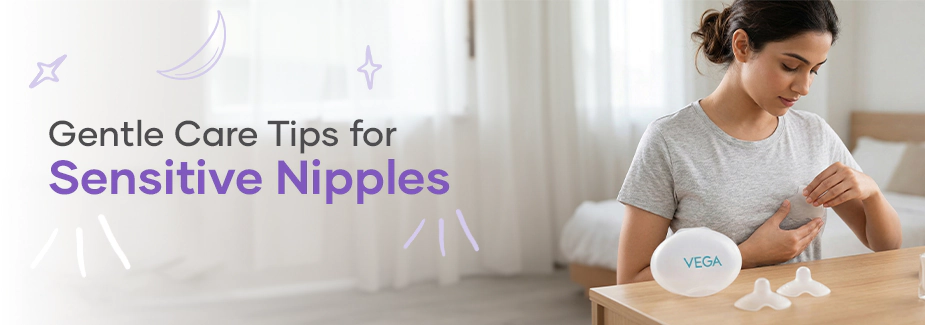
Breastfeeding is a beautiful and natural way to nourish your baby, but it can sometimes come with challenges, especially when dealing with sensitive or sore nipples. Many new mothers experience discomfort in the early days, but with the right nipple care during breastfeeding and effective breastfeeding tips, you can protect your nipples and make breastfeeding a more comfortable experience.
Why do nipples become sensitive during breastfeeding?
Nipple sensitivity is common, particularly in the first few weeks after birth. Some of the main reasons are as below:
-
Improper latch by the baby
-
Frequent feeding sessions
-
Dry or cracked skin
-
Use of harsh soaps or products
-
Engorgement or blocked ducts
Understanding these causes is the first step toward effective nipple pain relief breastfeeding and better breast care for new moms.
Tips to protect sensitive nipples while breastfeeding
Use a nipple shield

A nipple shield for breastfeeding is a great solution for nursing pain relief. It helps babies latch better and protects sore nipples.
What is a nipple shield
Nipple shield is a thin protective cover made of soft and flexible silicone. It is firmly placed over the nipples of nursing mothers to temporarily help babies facing latching issues. There are many benefits of using nipple shield for nursing moms as it encourages a natural suckling motion and allows easy milk flow into baby’s mouth through the holes in the tip of the teat. Moreover, it also creates a shield to help breastfeeding mom struggling with sore or cracked nipples and minimize discomfort. You can try Vega Baby & Mom Nipple Shield. It is made with soft silicone thin material with anti-gripping lines which gives maximum skin to skin contact between body and mother to ensure the child always gets breastmilk. It is easier for moms to hold right while breastfeeding.
Keep nipples moisturized
Dryness can worsen sensitivity. Apply breast milk to keep the skin hydrated and promote healing. You can also consult the doctor for medicated cream.
Use breast pads wisely

Breast pads help absorb leakage, but damp pads can cause irritation. Change them frequently and opt for breathable, soft materials like the Vega Baby & Mom Breast Pads. Vega Baby & Mom Breast Pads are ultra-thin which makes them comfortable to wear inside clothing. They are made of breathable material that promotes air circulation and traps moisture, thus keeping the breasts fresh. Their 3D Pearl Vein Design and 5 layers of quick absorption technology make these breast pads highly absorbent and quickly disperse breast milk for instant dryness without any leakage. Additional features include:
-
Feather like touch which is gentle on the skin.
-
Large cover area to cover the breasts of different nipple sizes.
-
Leak proof outer lining ensuring pads soak up any unexpected leaks.
-
Easy to use and carry.
-
Comes in two variants – Pad 12 pcs or Pad 48 pcs (48+2 free).
Air dry after feeding
Allowing your nipples to dry air after each feeding session is one of the simplest breastfeeding care tips. This helps prevent moisture buildup and supports natural healing.
Avoid harsh products
Skip soaps, alcohol-based products, or strong cleansers on the nipple area. These can strip natural oils and increase dryness.
Wear comfortable clothing
Choose loose-fitting, breathable bras made from soft fabrics. Tight or rough materials can increase friction and irritation.
Try different feeding positions
Changing breastfeeding positions can reduce repeated pressure on the same area of the nipple, helping prevent soreness.
Stay hydrated and maintain nutrition
Healthy skin starts from within. Drink plenty of water and eat a balanced diet to support skin repair and overall well-being.
Seek professional help
If you experience severe nipple pain, bleeding, or infection, consult a lactation expert for breastfeeding problems and solutions.
Key Takeaways
Sensitive nipples during breastfeeding are common, but they don’t have to disrupt your breastfeeding journey. With proper care, right breast care accessories, correct techniques, and timely support, you can protect your nipples and enjoy a comfortable breastfeeding experience. Remember, taking care of yourself is just as important as caring for your baby.
Disclaimer: The information provided here is for general purpose only and is not a substitute for professional advice. Always consult your healthcare provider before making any decision regarding your baby's health and care.
FAQs:
Is nipple pain normal during breastfeeding?
Yes, mild nipple sensitivity is common in the early days of breastfeeding. However, persistent or severe pain may indicate issues like improper latch or infection.
How can I soothe sore nipples naturally?
You can apply a few drops of breast milk, use a cold compress, or let your nipples dry after feeding to promote healing.
What is the best way to prevent nipple pain while breastfeeding?
Ensuring a proper latch, maintaining nipple hygiene, and using doctor recommended moisturizing creams can help prevent discomfort.
How often should I change breast pads?
Breast pads should be changed frequently, especially when they become damp to avoid irritation and infection.
